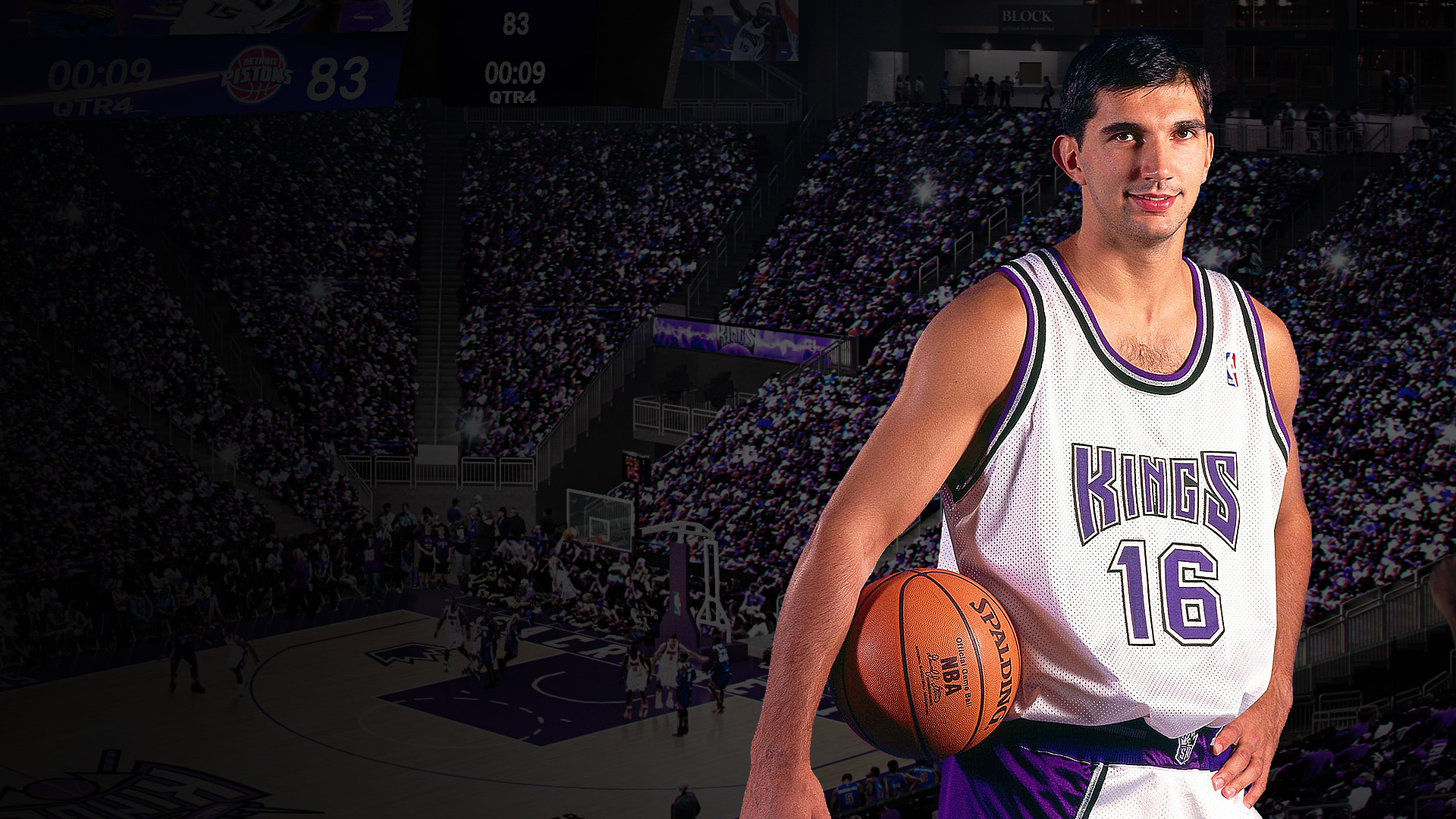
Biography
- Full Name: Predrag Stojakovic
- Date of Birth: June 9, 1977
- Place of Birth: Slavonska Pozega, SFR Yugoslavia
- Height: 208 cm (6'10")
- Position: Small Forward / Stretch Forward
Predrag Stojakovic was born on June 9, 1977, in Slavonska Pozega. He took his first basketball steps in the Crvena Zvezda system, going through their youth categories, but his development soon continued outside of Serbia, under circumstances that marked an entire generation of players from that period.
His professional breakthrough came in Greece, wearing the PAOK jersey, where in the mid-nineties he gained playing time and consistency at the highest level of European basketball. During this period, his name was transcribed in Greece as Πρέντραγκ Στογιάκοβιτς, while internationally, and especially later in the NBA, he became widely known as Peja Stojakovic – a nickname that practically became his global identity.
Even in his early seasons, he showcased the profile that would follow him throughout his career – a tall forward with a reliable outside shot, capable of playing off the ball and punishing any defensive mistake.
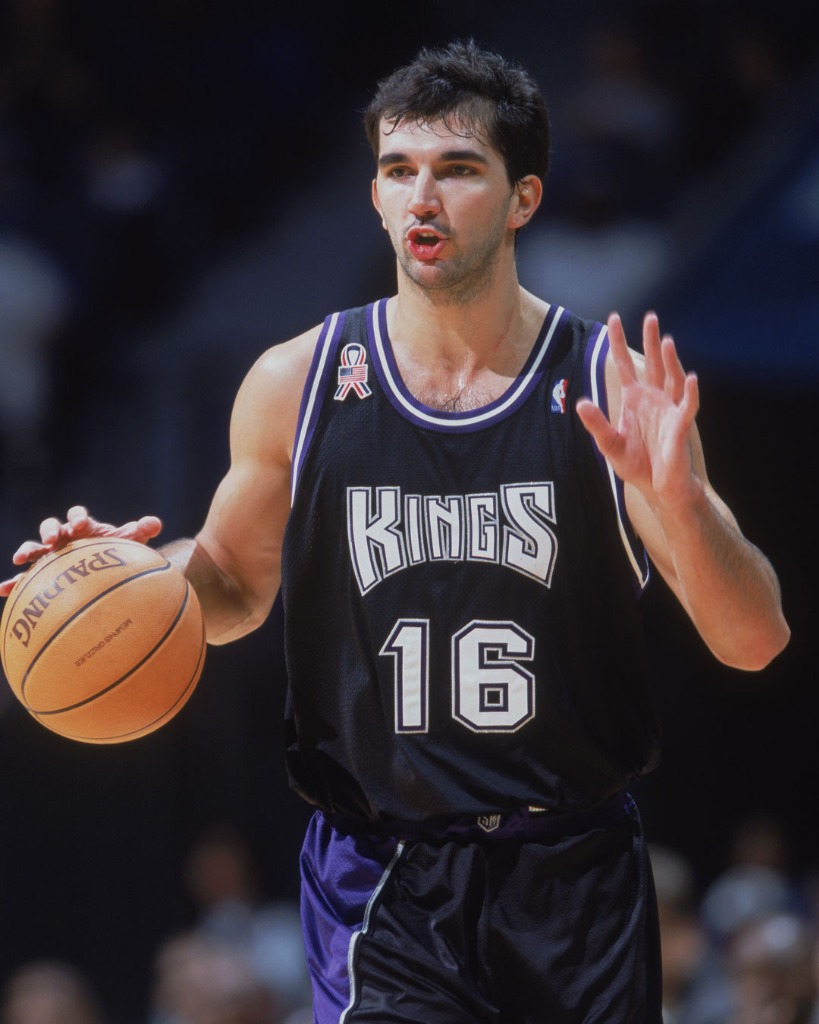
NBA career and legacy
Draft and Europe
In the 1997/98 season, he established himself as one of the most efficient players in the Greek league, catching the attention of NBA scouts. Although he was drafted in 1996 as the 14th overall pick, the decision to stay in Europe and further develop his game proved crucial – he entered the NBA ready, with a clear identity and a defined role.
That period at PAOK represents the foundation of his later career: his playing profile was formed early, and what he would later improve were not the basics, but the nuances – speed of decision-making, shot selection, and understanding the game at the highest level.
Sacramento Kings (1998–2006)
Predrag Stojakovic was selected as the 14th pick in the 1996 NBA draft by the Sacramento Kings, but he didn't join the league until 1998. In his early seasons, he became part of the rotation of a team built around speed, ball movement, and shooting quality.
His true breakthrough came in the early 2000s when Stojakovic became a key player for the Sacramento Kings – a team considered one of the highest quality and most attractive in that NBA era. In a system led by Chris Webber and Vlade Divac, his role was clearly defined: perimeter shooting, off-ball movement, and being a constant threat that stretched the floor.
The Sacramento team from that period is remembered as one that was a step away from the title, highlighted by the 2002 series against the Lakers, which is still considered one of the most controversial in NBA history.
Indiana, New Orleans, Toronto
After being traded from Sacramento in 2006, he moved to Indiana but stayed there only briefly.
He found a more stable role in New Orleans, where he was part of a competitive team that reached the top of the Western Conference in 2007/08. During this period, he remained a reliable shooting option, though no longer the primary offensive focus. He also had a short stint with Toronto before the final stage of his career.
Dallas Mavericks (2011)
In the 2010/11 season, he joined Dallas, accepting a smaller but clear role in the rotation.
In the playoffs, he provided experience and shooting stability, especially in the series against the Lakers and Thunder, as part of the team led by Dirk Nowitzki. He finished the season by winning the NBA title – his only championship ring. Following this, he retired from professional basketball.
Jersey #16 retirement and front office role (2014–2020)
In December 2014, the Sacramento Kings officially retired his #16 jersey, cementing Stojakovic among the franchise's all-time legends. From 2015 to 2020, he served in executive leadership with the Kings – first as Director of Player Personnel and Development, and subsequently as Assistant General Manager and General Manager of the Stockton Kings in the NBA G League.
FIBA Hall of Fame and modern impact (2024–2026)
Crowning his international and NBA legacy, Stojakovic was officially inducted into the FIBA Hall of Fame in Singapore in September 2024. Throughout 2025 and 2026, basketball analysts regularly highlight him as an essential blueprint for the modern NBA "stretch-wing" archetype – a 6'10" forward whose high-volume, high-efficiency perimeter shooting transformed floor spacing.
Club and executive career timeline
| Period | Club | League | Note |
|---|---|---|---|
| 1992–1993 | Crvena Zvezda | FRY | Senior debut and national championship title (1993) |
| 1993–1998 | PAOK Thessaloniki | Greece / Europe | FIBA Korac Cup (1994), Greek Cup (1995), Greek League MVP (1998) |
| 1998–2006 | Sacramento Kings | NBA | Prime years, 3× All-Star, All-NBA Second Team (2004), #16 jersey retired |
| 2006 | Indiana Pacers | NBA | Starter in the second half of the season and playoffs |
| 2006–2010 | New Orleans Hornets | NBA | Stable starter role, Western Conference Semifinals (2008) |
| 2010–2011 | Toronto Raptors | NBA | Short stint prior to joining Dallas |
| 2011 | Dallas Mavericks | NBA | NBA Champion (2011) |
| 2015–2020 | Sacramento Kings | NBA (Front Office) | Director of Player Personnel & Assistant General Manager |
| 2024–2026 | FIBA / Basketball Legacy | International | FIBA Hall of Fame Induction (2024) & Mentorship |
National Team
Predrag Stojakovic was a key player for the national team during its golden era at the beginning of the 21st century, providing elite offensive firepower.
| Period | Team | Competition | Result |
|---|---|---|---|
| 1999 | FR Yugoslavia | EuroBasket (France) | Bronze |
| 2001 | FR Yugoslavia | EuroBasket (Turkey) – Tournament MVP | Gold |
| 2002 | FR Yugoslavia | World Championship (Indianapolis) – All-Tournament Team | Gold |
| 2024 | FIBA | FIBA Hall of Fame (Singapore) | Hall of Fame Inductee |
NBA stats
| Season | Team | G | MIN | PTS | REB | AST | 3P% | FG% |
|---|---|---|---|---|---|---|---|---|
| 1998/99 | Sacramento | 48 | 21.4 | 8.4 | 3.0 | 1.5 | 38.5 | 43.0 |
| 1999/00 | Sacramento | 77 | 23.6 | 11.9 | 3.8 | 1.4 | 37.5 | 44.5 |
| 2000/01 | Sacramento | 75 | 34.8 | 20.4 | 5.8 | 2.2 | 40.0 | 47.0 |
| 2001/02 | Sacramento | 71 | 37.3 | 21.2 | 5.3 | 2.5 | 41.6 | 48.4 |
| 2002/03 | Sacramento | 75 | 36.5 | 19.2 | 5.5 | 2.3 | 41.6 | 48.1 |
| 2003/04 | Sacramento | 81 | 40.3 | 24.2 | 6.3 | 2.1 | 43.3 | 48.0 |
| 2004/05 | Sacramento | 66 | 38.4 | 20.1 | 5.3 | 2.2 | 40.0 | 44.4 |
| 2005/06 | SAC/IND | 40 | 37.0 | 16.5 | 4.3 | 2.2 | 39.7 | 44.0 |
| 2006/07 | New Orleans | 13 | 32.8 | 17.8 | 4.2 | 1.2 | 40.5 | 42.3 |
| 2007/08 | New Orleans | 77 | 33.2 | 16.4 | 4.3 | 1.2 | 44.1 | 44.0 |
| 2008/09 | New Orleans | 61 | 31.3 | 13.3 | 4.2 | 1.2 | 39.9 | 43.9 |
| 2009/10 | New Orleans/TOR | 62 | 29.1 | 10.3 | 3.8 | 1.1 | 37.5 | 42.5 |
| 2010/11 | DAL/TOR | 66 | 18.7 | 8.5 | 2.6 | 0.9 | 42.9 | 42.4 |
NBA Career Totals
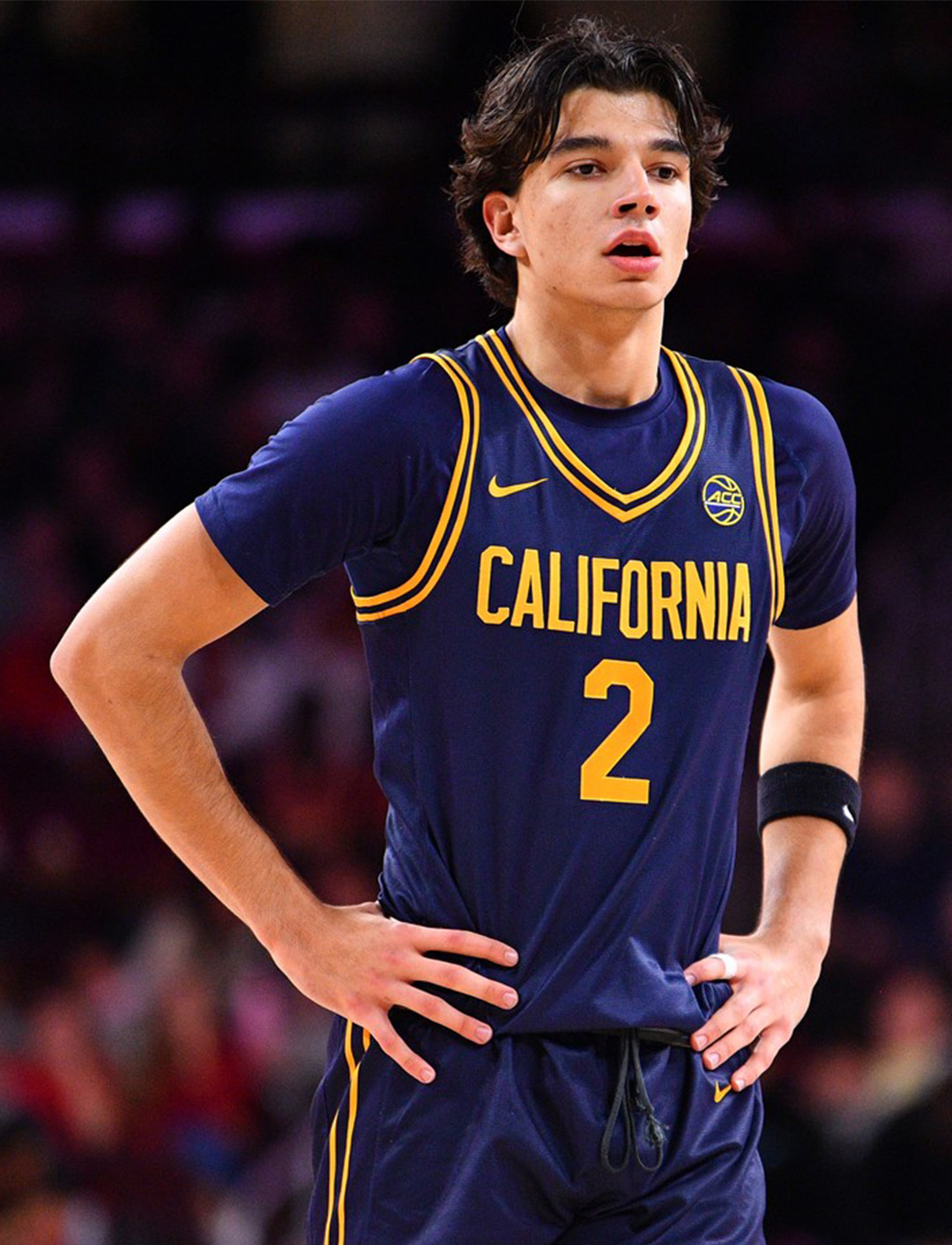
Andrej Stojakovic
- Date of Birth: August 17, 2004
- Height: ~201 cm (6'7")
- Position: Shooting Guard / Wing
- NCAA Teams: Stanford (2023/24), California (2024/25), Illinois (2025–2026)
- Father: Predrag Stojakovic
Andrej Stojakovic developed through the American basketball system, starring at Jesuit High School in Sacramento where he earned McDonald's All-American honors (2023) and built a reputation as an elite perimeter shooter and versatile wing. As the son of Predrag Stojakovic, his development path has progressed through power-conference NCAA basketball.
He began his college career at Stanford (2023/24) before transferring to the University of California (Berkeley). Wearing the Cal Golden Bears jersey in the 2024/25 season, he delivered a major breakout campaign in the ACC, averaging 17.9 points, 4.7 rebounds, and 1.8 assists per game, highlighted by a career-high 37-point outburst against Stanford in the ACC Tournament.
In the spring of 2025, he transferred to the University of Illinois (Fighting Illini) in the Big Ten Conference, where during the 2025/26 and 2026/27 seasons under coach Brad Underwood he solidified his status as one of college basketball's premier perimeter scorers and a legitimate NBA prospect.